End the Silence by Meeting Survivors Where They Are
Meeting survivors where they are is the best way to empower them. The urgency of their situations often tempts us to react instead of choosing our interventions to match survivors’ goals and readiness for change. This article offers suggestions for meeting them effectively.
End the Silence Module
The End the Silence module contains information that promotes a strong foundation for
survivor healing. The underlying principles of this module are listening, reflecting what you hear, empathizing, and asking questions that encourage their processing.
Survivors of partner abuse sometimes come for therapy without naming abuse. They may call what their partner does abuse or coercive control, but they may also say it’s their fault or their partner is under stress. Sometimes they’re ready to leave; often they want to continue the relationship but want their partner to change.
It all depends upon what they know and believe about what they experience, often influenced by the coercive controller.
It’s natural to want to name abuse whenever you perceive it. However, effective survivor therapy begins where the survivor is and builds their recognition.
Begin Naming Where They Start
Naming their partner’s behavior is a first step in regaining their power. Believing their abusive partner’s distortions and accusations feeds their shame and helplessness. However, naming needs to start with what they call it.
There are many reasons survivors find it difficult to name abuse. Common ones are:
They love their partner, feel committed to the relationship, and don’t want to consider their partner is abusive.
Their partner’s denial, blame, and gaslighting creates shame and low self-worth.
They see themselves as strong and capable, not victims.
I always agree about their strength and resilience, and think that's also true with all survivors. I tell them there is a difference between being victimized and having a victim identity. They are not what happened to them.
It’s hard for them to acknowledge two painful realities: their partners believe it’s okay to harm them, and no matter how much they try to please them, it won’t lead their partners to change.
Guiding survivors in naming abuse promotes their agency. Telling them it's abuse before they arrive at it does not. Too often that feels like you’re judging them or their abusers, which usually leads to defensiveness. The following Step-by-Step instructions provide a guide.
End the Silence Step-by-Step
This Step-by-Step Naming process respects where they are and gradually invites them to consider new perspectives.
Begin with open-ended, non-judgmental questions. Examples:
When your partner does that, what do you think is happening?
How do you feel when your partner does that?
What do you call what your partner did?
This often uncovers what they call the behavior as well as what they believe causes it. This is the best place to start.
Reflect what you’re hearing, empathize, and ask questions that encourage insights.
Examples:
It sounds like you feel sad about how the relationship has changed.
How did you feel when that happened?
I’m surprised your partner doesn’t seem to care about your needs. Does it seem that way to you?
Give your perceptions and ask for theirs. Being curious creates trust in you and in themselves. They rarely have the mental space at home to process what’s happening. If they disagree with your perception, be interested in why. Make space for discussion.
Express concerns without judging their partner. Even when they perceive a partner is abusive, they often are defensive about their partners. Examples:
I’m concerned for you because:
Living on pins and needles is stressful. How does it affect you?
Your partner not loving you must feel awful. How do you cope with this?
I don’t believe you deserve to be treated that way. No one does.
I think what your partner does contributes to depression for most people. When did your depression start?
This elicits more information about how they’re affected. Your empathy and insights often cause new realizations.
Name what you perceive as abuse tentatively at fire. This becomes possible as you build connection and trust with them.
What I’m hearing from you matches what I know as coercive control. I’m guessing that is hard to hear. Would you be willing to look at a coercive control checklist to see if you agree?
Many clients I’ve worked with call this abuse. What do you think?
This approach builds rapport, gives new perspectives, and begins to name what’s happening without telling them what to do or judging their partner.
This is key because you want to increase their sense of agency, not step in and become another person who tells them what to do or think. If they ask for advice, give information, normalize the difficulties of hearing it, and ask what they think about it.
Safety
When therapists detect safety concerns, this sometimes leads to the “telling” mistake I advise avoiding. It’s completely understandable that as your concern for them deepens, there is the temptation to “fix” it.
However, saying something like, “you should leave” often results in two unwanted outcomes. Either they feel pressure to please you or they drop out of therapy. Both of these increase safety risks. Leaving is the most dangerous time for survivors. They need preparation.
Instead, consider questions such as these:
Ask them for ways they’ve tried to deescalate conflicts and whether they’ve worked. This uncovers how they’ve coped and leads to discussion about other safety strategies. Download this free Safety Suggestions handout for ideas.
Remind them that giving in to avoid abuse is a way of coping when they sense danger. They frequently feel shame about it, so normalize the strategy as staying safe. Stress safety, not being assertive.
Express concern and make a safety plan that addresses both emotional and physical abuse.
The highest risk behaviors according to Jacqueline Campbell[i] are:
Irrational jealousy by partner
Escalation of physical violence
Use of or threats to use weapons
Choking and strangling
Belief partner could kill them
Survivors who believe the partner could kill them should be taken seriously. They pick up on their partner’s verbal and non-verbal warning signals, even when they can’t name exactly why they perceive danger.
Ask whether it’s safe to take information home. If it’s not safe, go over materials in your office. It may also be helpful to brainstorm safe places to keep it.
Healing Comes from Owning Their Stories
Owning their stories means they recognize what happened, understand how it’s affected them, and are less vulnerable to believing their abusive partners. They begin to see themselves differently. Instead of feeling like failures, they begin to feel better about themselves and focus on what they want to do.
From this foundation, they are in a better place to release shame, recognize their strengths, and begin rebuilding confidence. This will allow them to more effectively employ skills like cognitive-behavioral strategies, boundary repair, and assertiveness.
End the Silence therapy techniques and materials provide a foundation for healing today and for healthier relationships in the future.
My presentation at the Smoky Mountain Symposium on Relational Trauma in October will include more End the Silence information for survivor therapy, including role-play demonstrations. Learn more and register here.
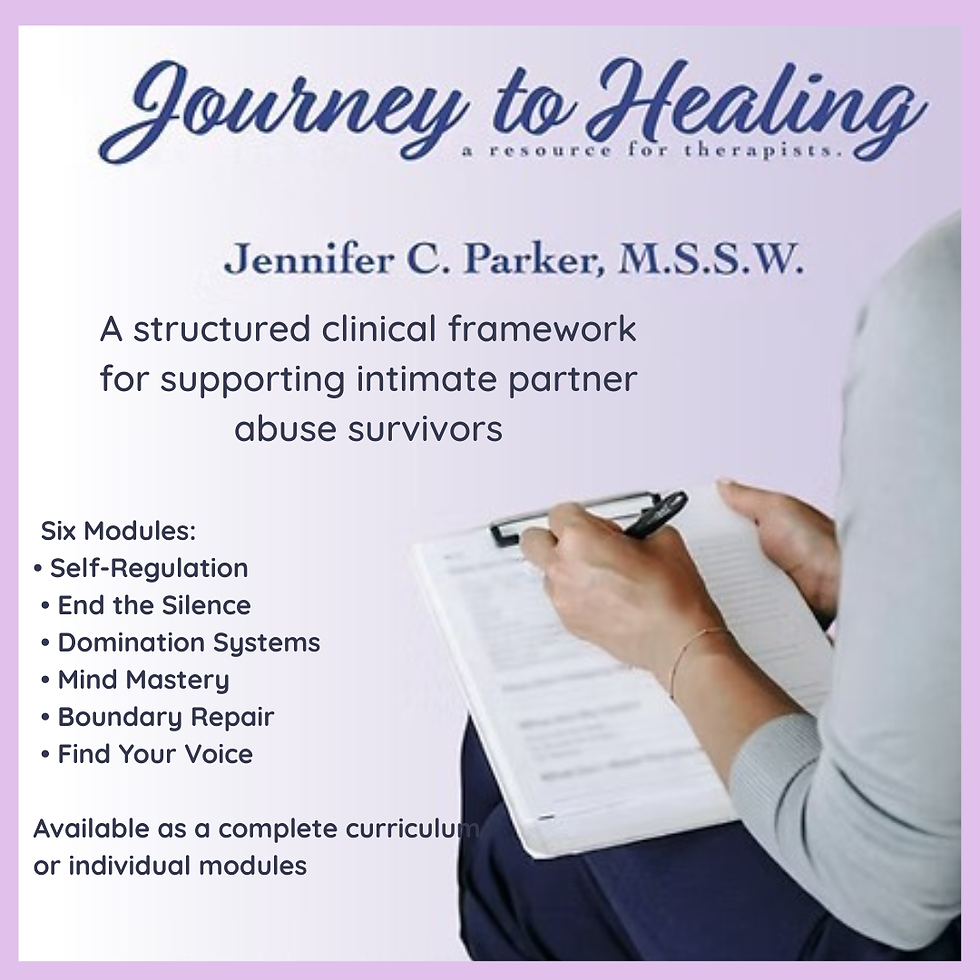
End the Silence is one module of the Journey to Healing therapy materials for survivors of partner abuse. Learn more at https://www.findyourvoicehealing.com/resources-for-therapists
Besides End the Silence, modules include Self-regulation, Domination Systems, Mind Mastery, Boundary Repair, Find Your Voice, and Post-traumatic Growth, all designed to empower survivors of partner abuse.
[i] Jacqueline Campbell’s Danger Assessment training is available for free and takes 80 minutes to complete. https://www.dangerassessment.org/


Comments